Band Bingo: Brass & Woodwind Instruments
THE MUSIC EDUCATOR · FREE CLASSROOM GAME
Identify the instruments. Complete a line.
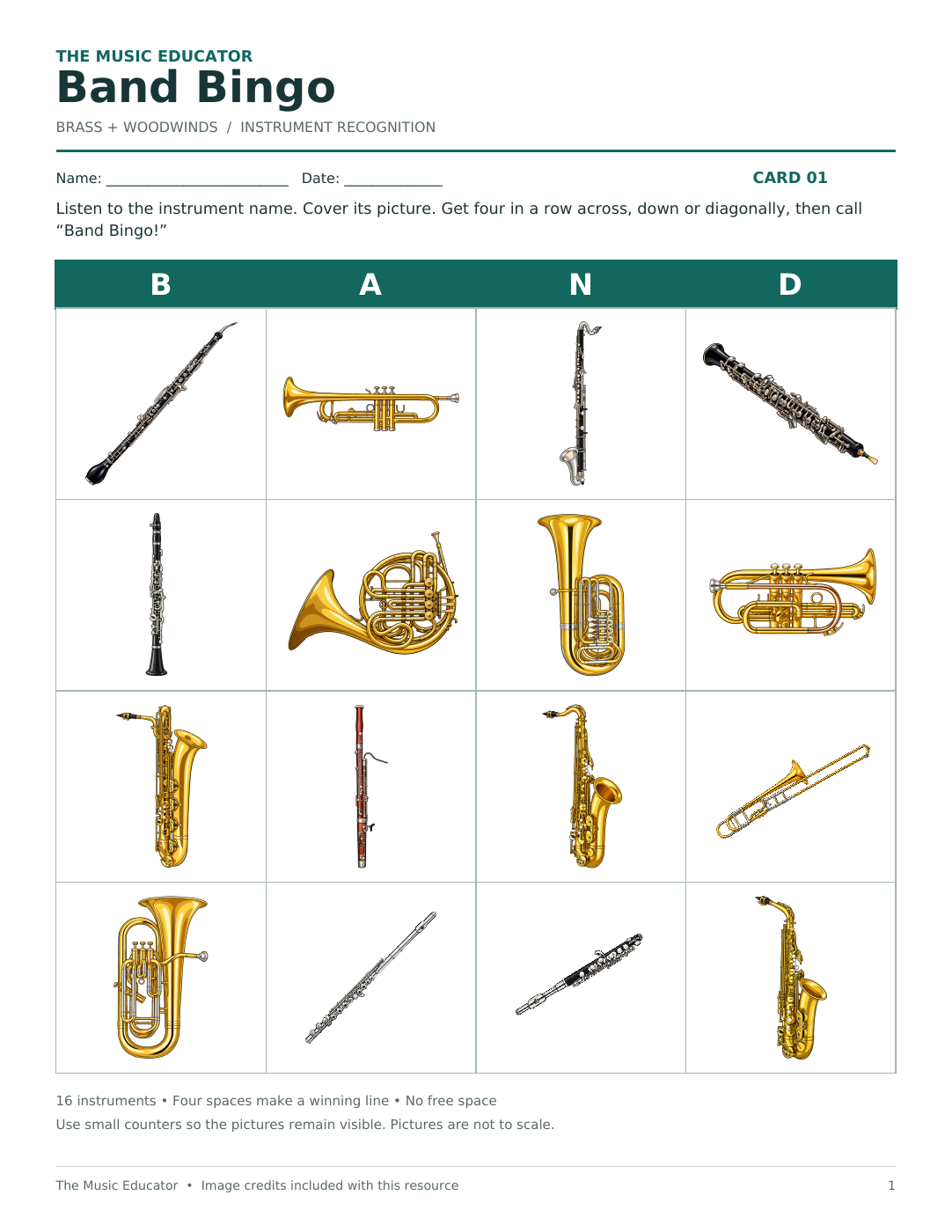
Build instrument vocabulary with a cartoon classroom bingo game from The Music Educator. Students match called names to 16 selected concert-band brass and woodwind instruments. Ten different card arrangements give small groups and teams a playful way to practice visual recognition.
10 cards · 4×4 grids · 17-page PDF · US Letter
Download Band Bingo — free PDF
Includes the caller reference, teacher directions, exact card keys and image credits. Approximately 8 MB.
What students practice
- Identify selected brass and woodwind instruments by appearance.
- Match spoken instrument names to illustrated examples.
- Distinguish look-alike instruments using teacher-guided visual clues.
- Explain which called instruments form a completed line.
What is included?
- Pages 1–10: ten different student cards, each with a 4×4 BAND grid.
- Page 11: cartoon instrument reference for the caller.
- Page 12: setup, directions and look-alike teaching notes.
- Pages 13–15: exact card-position keys to check winning lines.
- Pages 16–17: source-photo credits, adaptation notice and license links.
Print only the student pages you need. Keep the reference and keys for the teacher, and retain the credit pages with the resource. These are US Letter pages; print at actual size when your printer supports the page margins.
Instruments in this set
Woodwinds: piccolo, flute, oboe, English horn, bassoon, B-flat clarinet, bass clarinet, alto saxophone, tenor saxophone and baritone saxophone.
Brass: trumpet, cornet, horn (French horn), trombone, euphonium and tuba.
This is a selected concert-band set, not an exhaustive collection of every brass or woodwind instrument. The cartoon pictures are based on real instrument photographs and are not to scale.
How to play Band Bingo
- Review the caller sheet, especially instruments with similar shapes.
- Give each student or pair a different card and 16 counters. Use pairs or teams for groups larger than ten.
- Call instrument names in an unpredictable order. Students cover the matching picture.
- Four called pictures in a row, column or diagonal makes a winning line. There is no free space.
- Check the claimed line with the caller sheet, your called-name list and the matching card key.
Matching card numbers have identical arrangements. For a challenge, offer an appearance clue before naming the instrument. Use real instruments or additional reference pictures to show that finishes and construction vary.
Classroom ideas
Use a 10–15 minute round after an instrument-family introduction, at a music station, or as beginning-band vocabulary review. Model the difference between a flute and piccolo, trumpet and cornet, or euphonium and tuba before playing. Ask students to name a covered instrument afterward as a quick informal check. This activity assesses visual recognition, not identification by sound.
Teacher questions
Who is Band Bingo for?
Upper-elementary and beginning-band classes are a useful starting point. Adjust the pace, model unfamiliar instruments, and use pairs when students need support.
Can more than ten students play?
Yes. Play in pairs or teams, or reuse card arrangements. Students with the same card number have the same layout and may win together.
Are teacher references and keys included?
Yes. The PDF includes a labeled caller sheet, directions and card-position keys for all ten cards. Keep a list of the instruments you call to verify each claimed line.
Can I print in black and white?
Yes, although color helps show some visual differences. Test one page on your printer first and keep a clear reference sheet available. Use instrument shape rather than finish color as the main clue.
Photo and teaching notes
These cartoon illustrations were created with AI-assisted style transfer from licensed real-instrument photographs. They are for instrument recognition, not detailed anatomy or fingering instruction. Individual creators, source links and Creative Commons licenses are credited on pages 16–17; keep those credits with the resource and follow each image’s applicable attribution and ShareAlike terms. No manufacturer endorsement is implied. The English horn and bassoon have their bocals but no reeds fitted. The pictured clarinet uses a German key system. Instrument models vary.
Keep exploring
- Band Worksheets — instrument diagrams, rehearsal vocabulary and practice resources.
- All Free Music Worksheets — explore other music classroom topics.