
Music Theory Worksheets
Practice staff reading, symbol recognition, and note values. Choose a focused reading activity or browse the ten-sheet note-value collection.
Select a resource to see its preview, teaching notes, and printable PDF. Downloads are free.
Musical Mazes: 10 Note and Rest Adventures
Help ten named characters reach their instruments by following a target note or rest through an original maze. Download a 10-page student packet, separate teacher solution keys, or individual-page PDFs.
Preview and download the musical mazes and teacher answer keys
New: Music Theory Reading Lab
The Music Theory Reading Lab includes 10 free student activities. Each new worksheet includes eight questions and a matching answer key. Choose a single PDF or the complete 20-page packet.
Open the Music Theory Reading Lab and download the packet
- Bass Clef Line and Space Lab — Name notes on bass-clef lines and spaces, then compare octave placement.
- Ledger-Line Bridge — Read bass-clef ledger lines and identify middle C with octave numbers.
- Accidental Memory Map — Track sharps, flats, naturals, and barline resets in one melodic line.
- Ties, Slurs, and Attacks — Distinguish sustained ties from slurs and count durations and attacks.
- Meter Grouping Lab — Compare 3/4 and 6/8 using clearly bracketed groups of eighth notes.
- Major Key Signature Decisions — Apply major-key context, accidental order, and key-signature changes.
- Natural Minor Step Builder — Complete natural-minor scales and explain their half-step locations.
- Interval Number and Quality — Use letter spelling and half-step distances to identify intervals.
- Triad Quality Sort — Compare major, minor, diminished, and augmented triads using stacked thirds.
- Repeat Ending Route — Trace two passes through first and second endings and count performed beats.
Print page 1 of each individual PDF for students, or pages 1–10 of the packet. Keys follow the student pages.
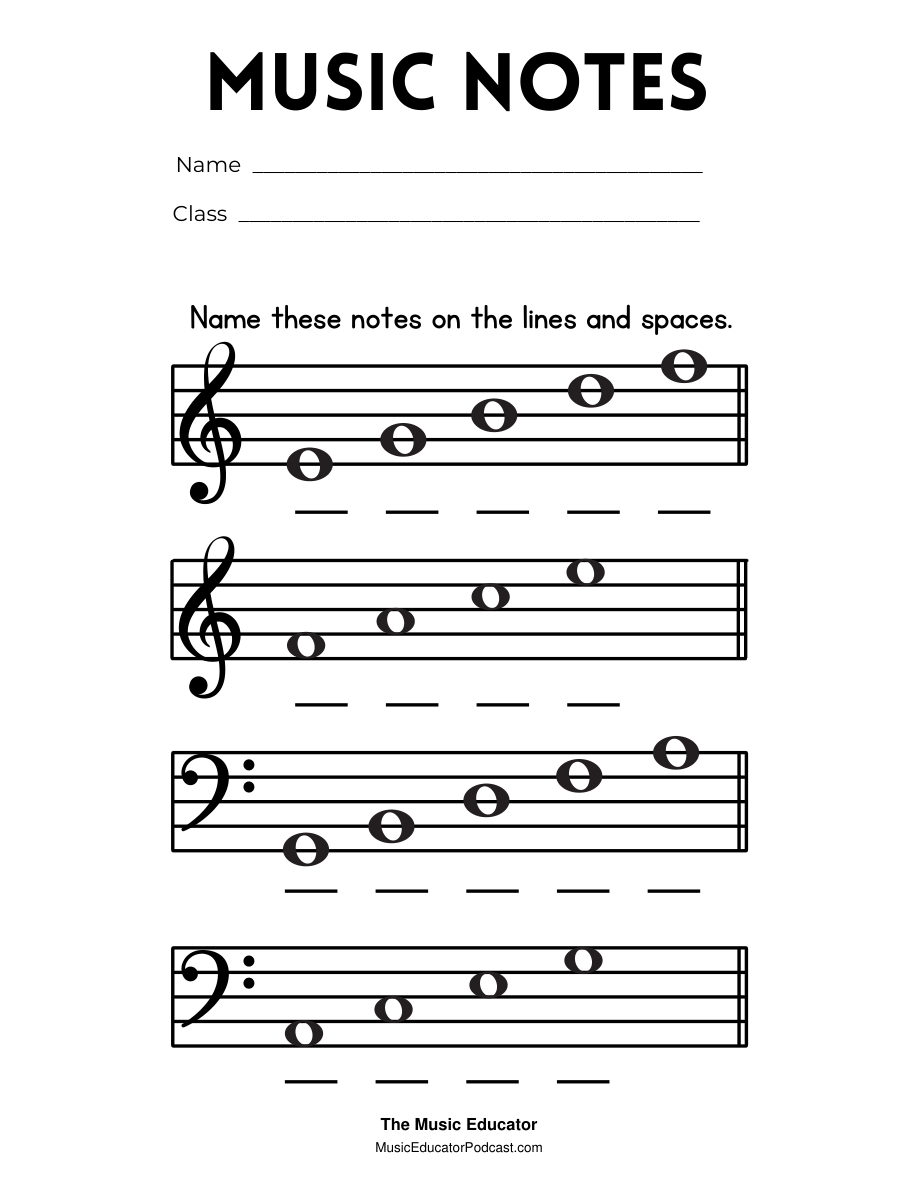
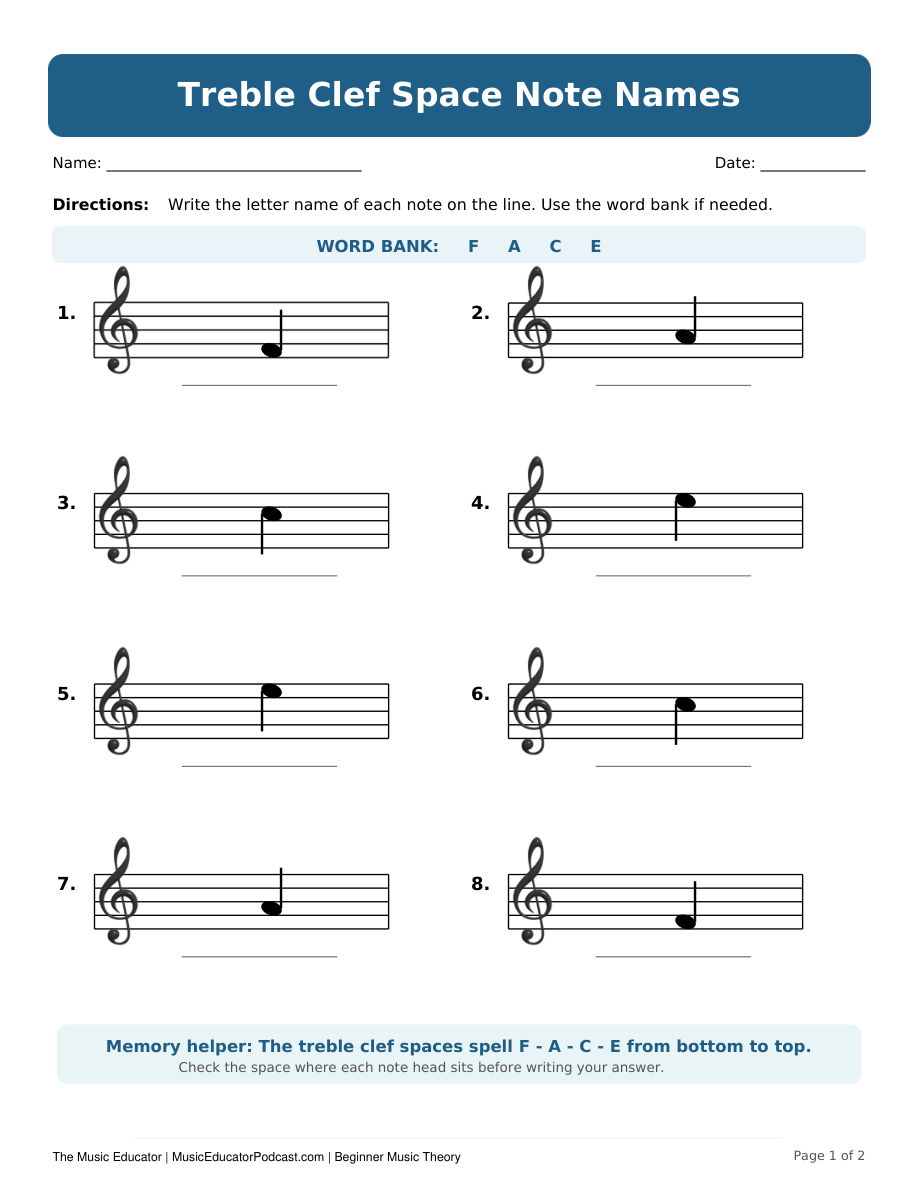
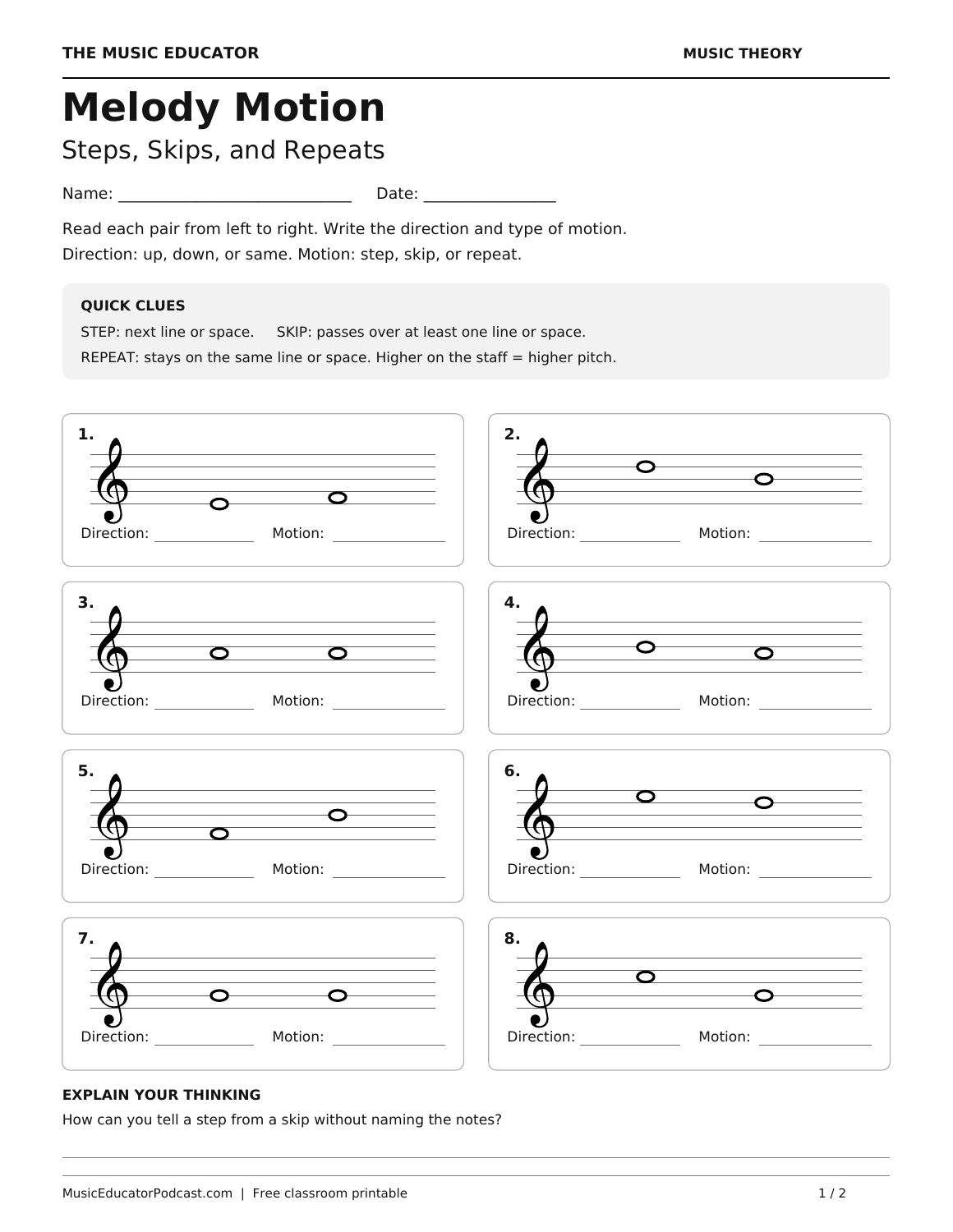
Note reading
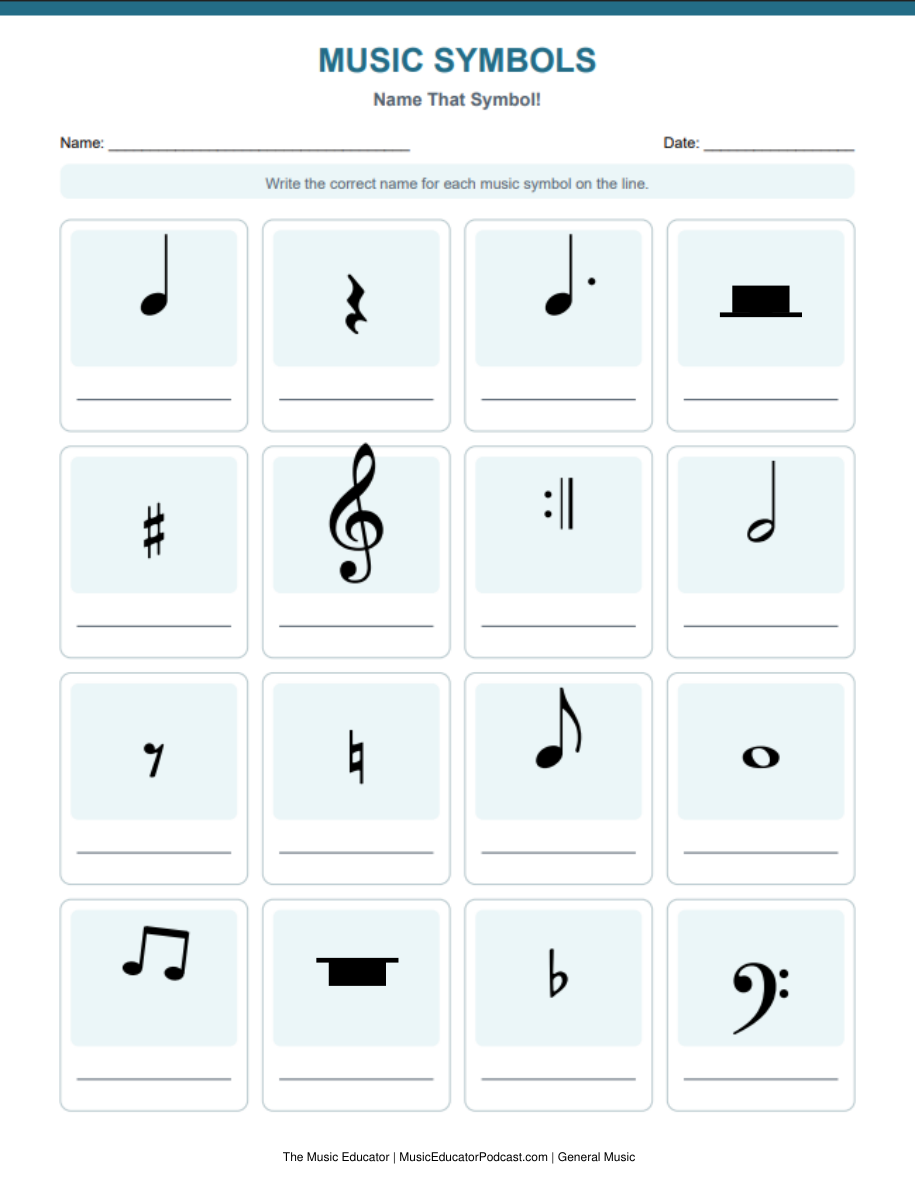
Notation symbols
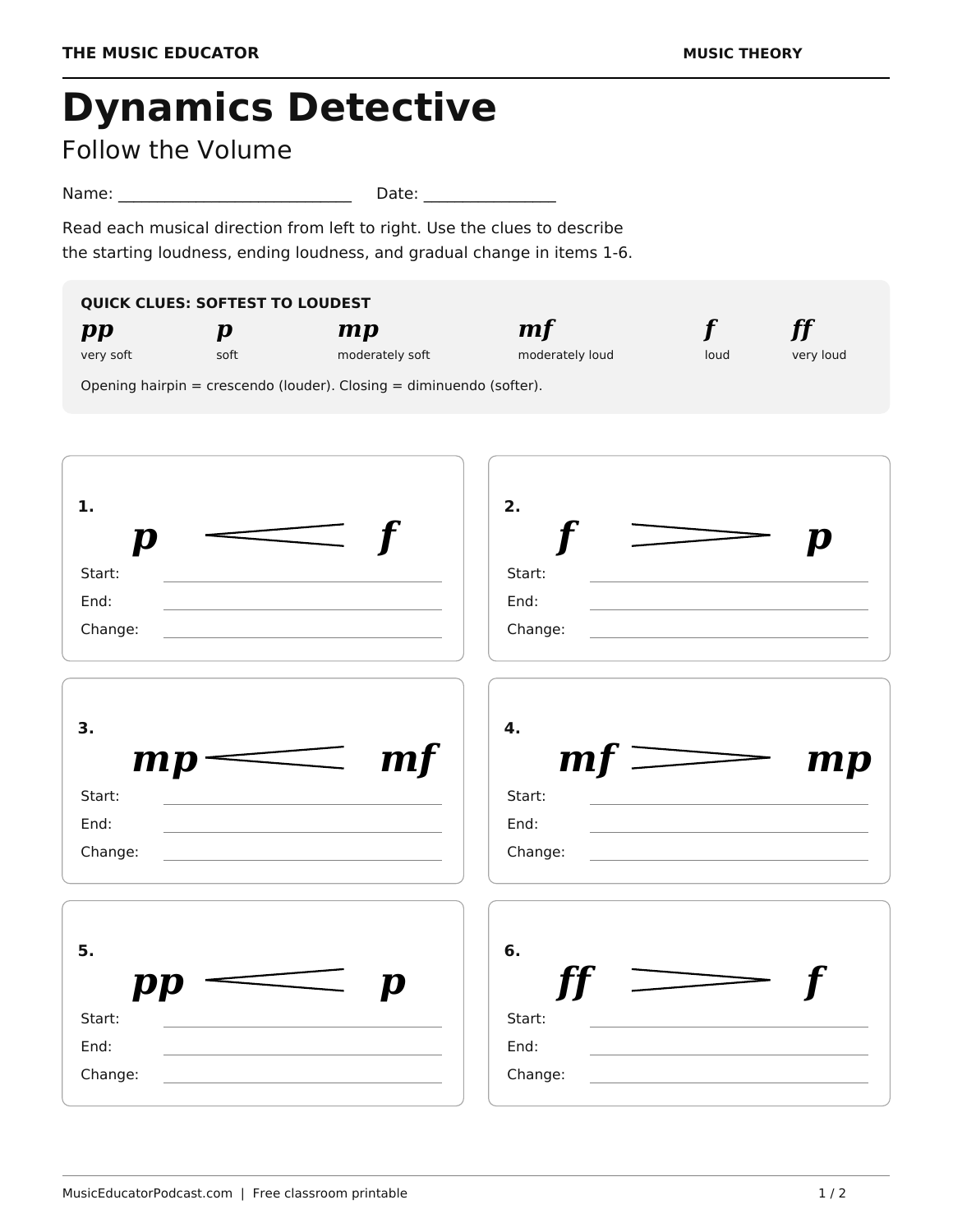
Rhythm and note values
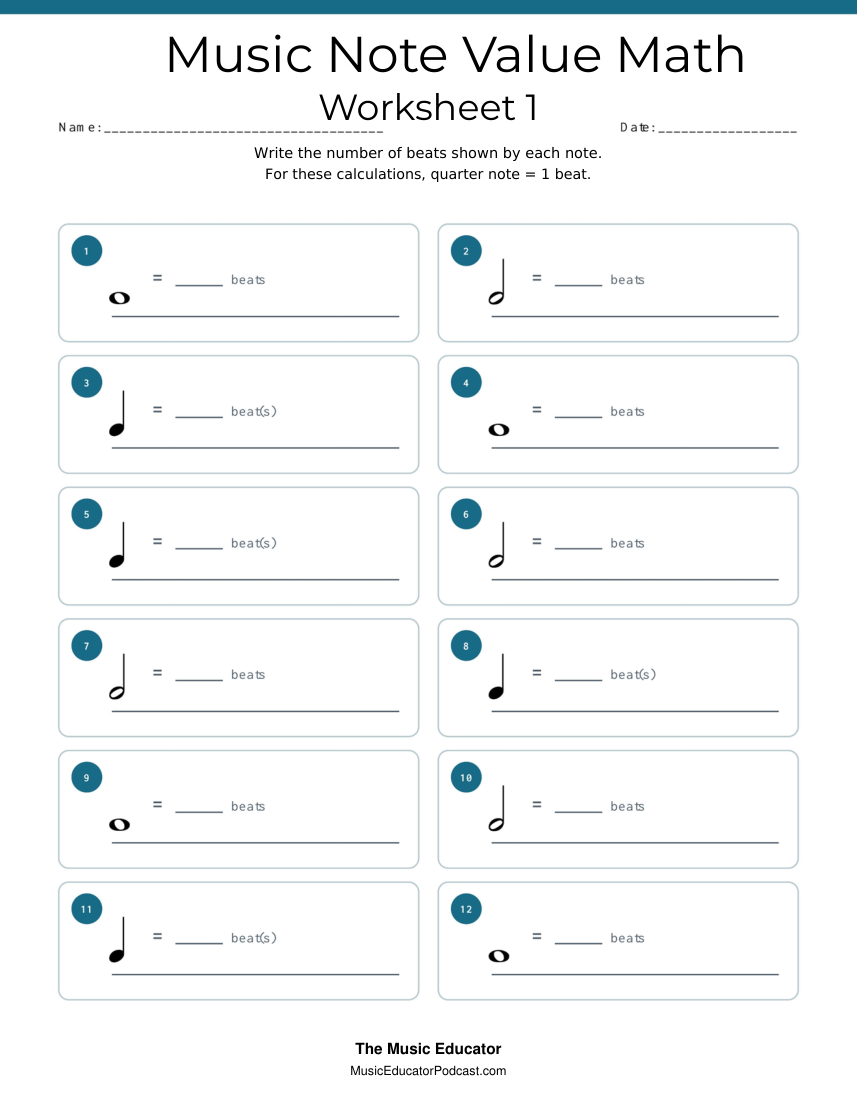
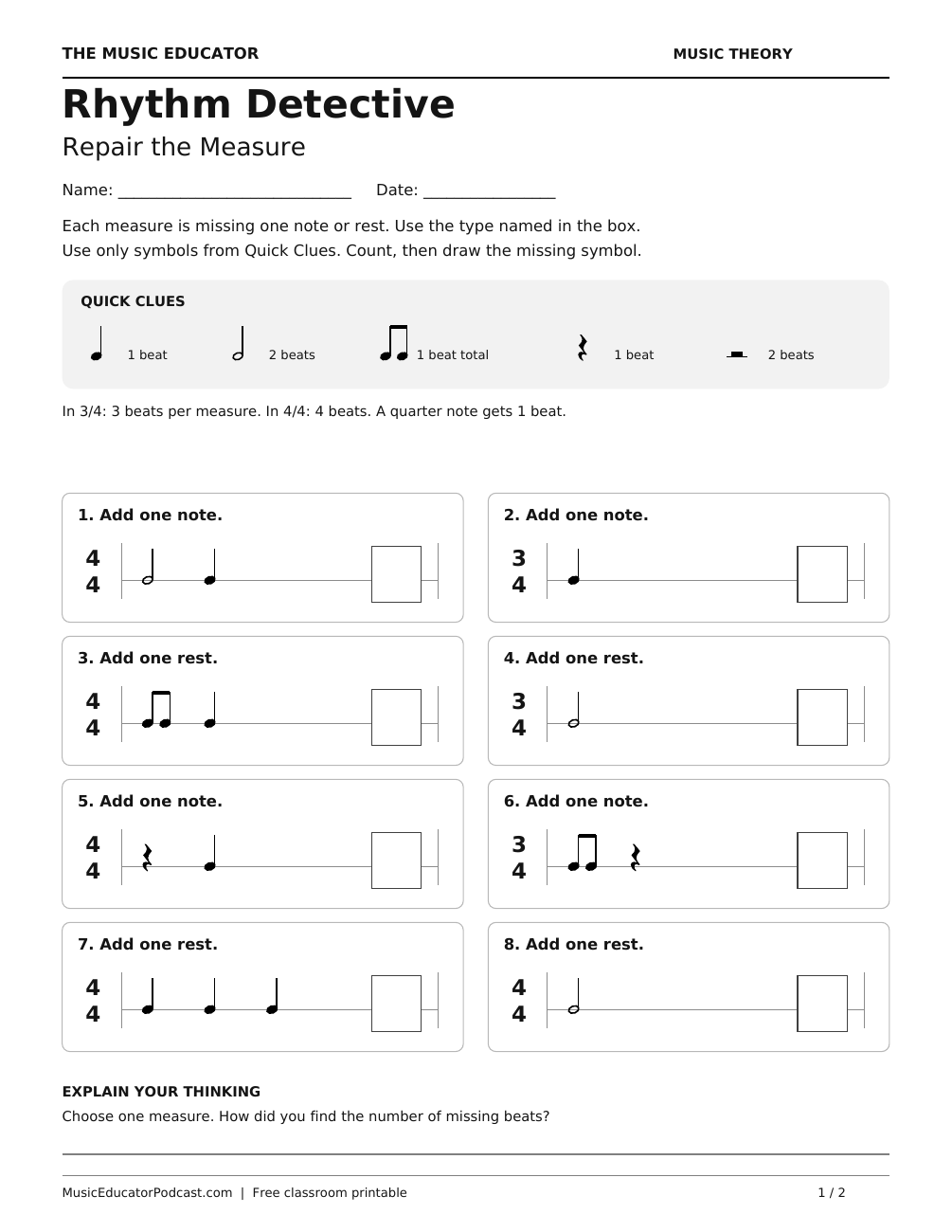
Scales and keys
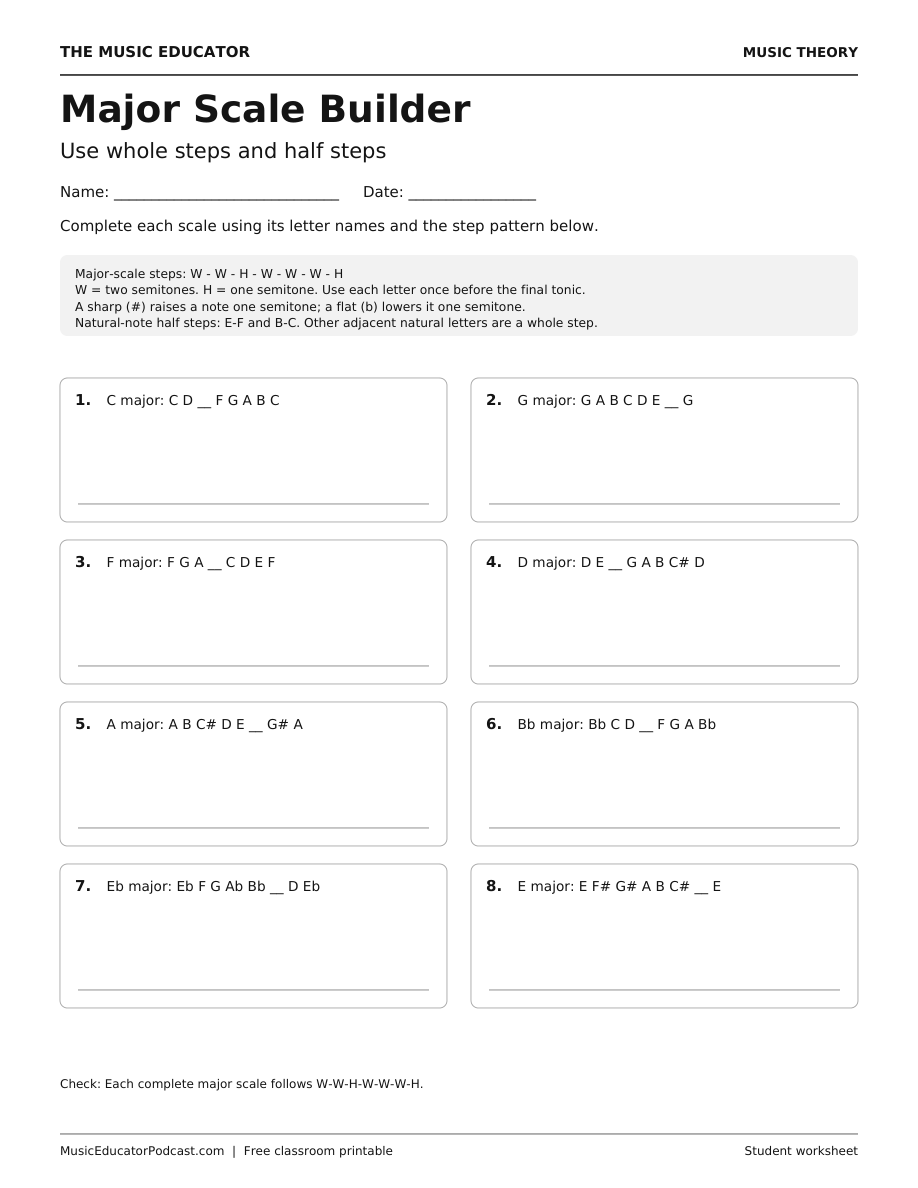
Plan a short activity
Choose the worksheet that matches the skill you are teaching, model one example, and let students try the rest. Use their responses to decide which terms or patterns need another demonstration. Check the resource page for the PDF’s contents before assigning it.