Free Music Worksheets
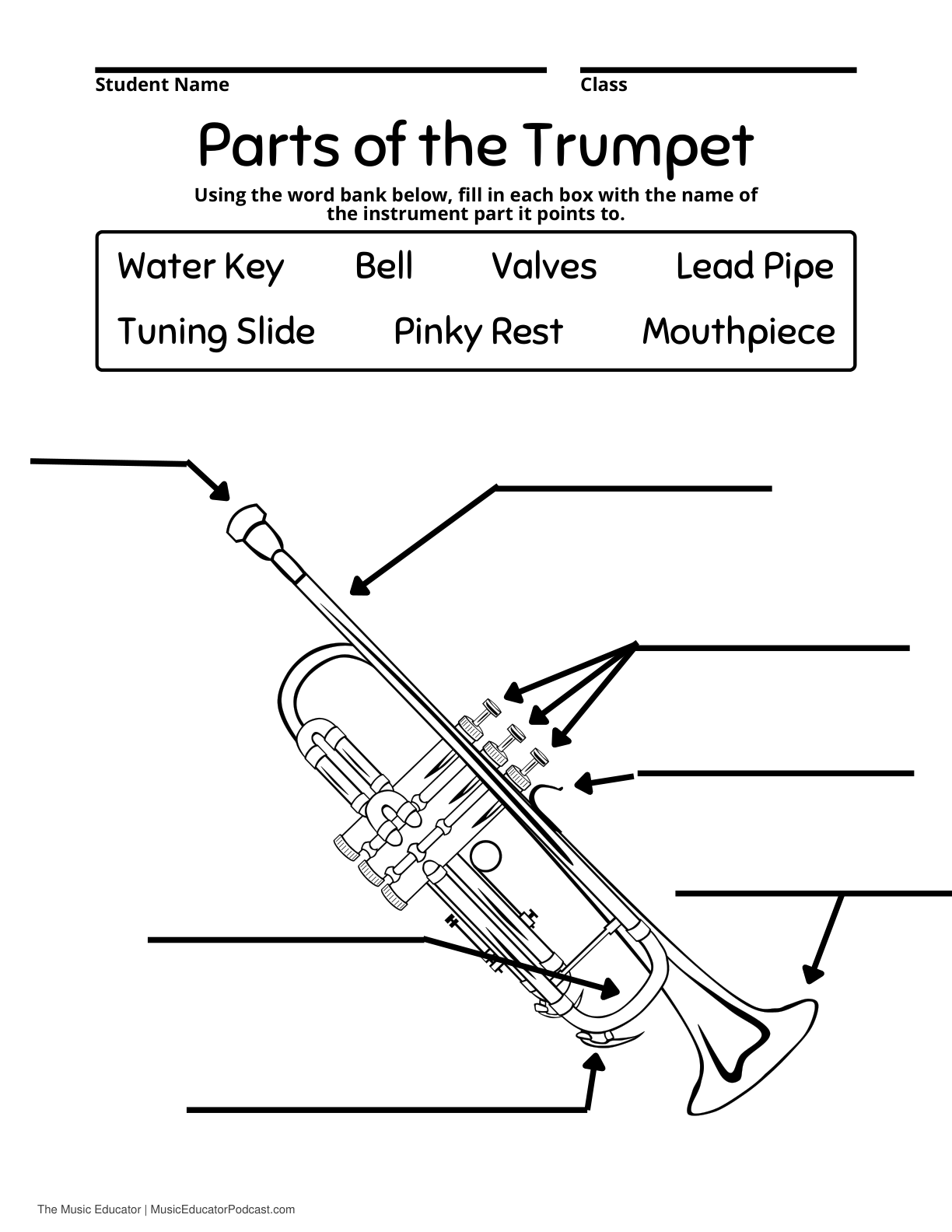
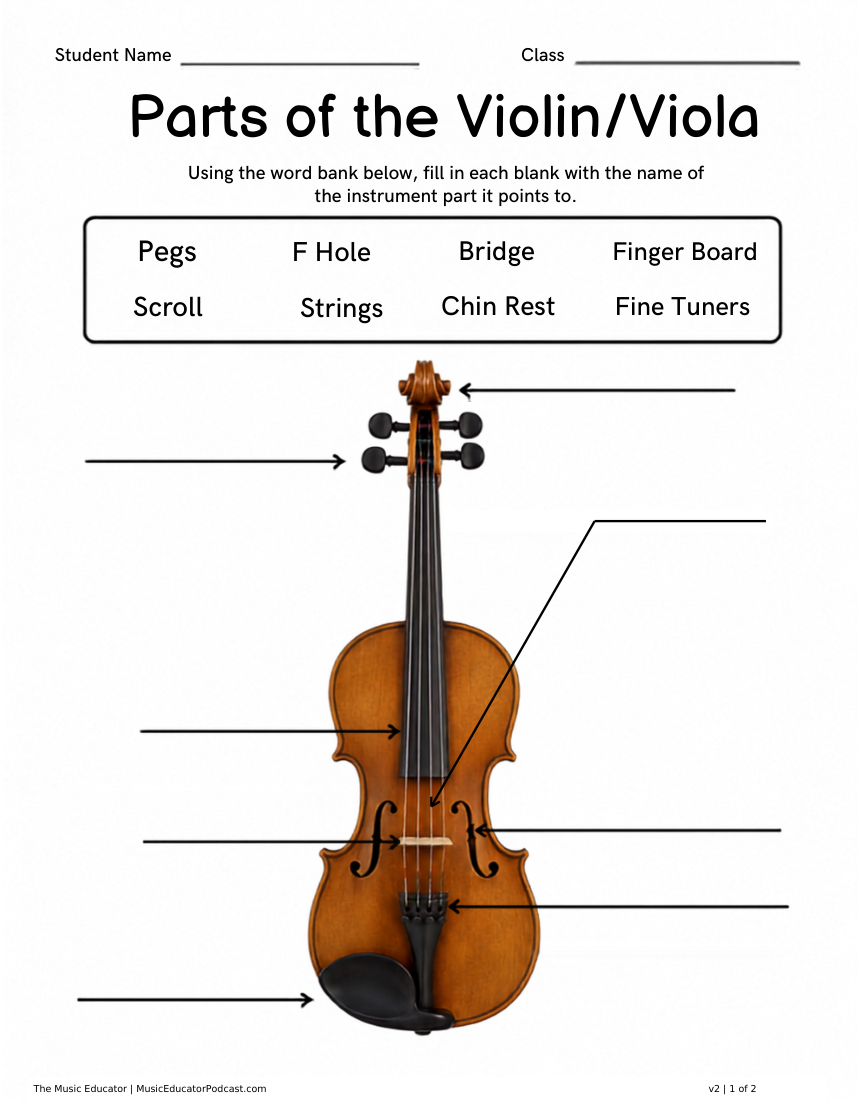
Printable worksheets from The Music Educator for music classrooms, ensembles, and individual lessons. Choose a subject, open a resource page, and download its PDF. You will find instrument diagrams, note-reading practice, rhythm activities, and student reflections.
START WITH ONE SKILL
Choose your teaching goal
Know what students need to practice? Start with one of these six focused activities. Each link opens a resource page with a preview and PDF download. Open a teaching idea for a practical follow-up.
NOTE READING
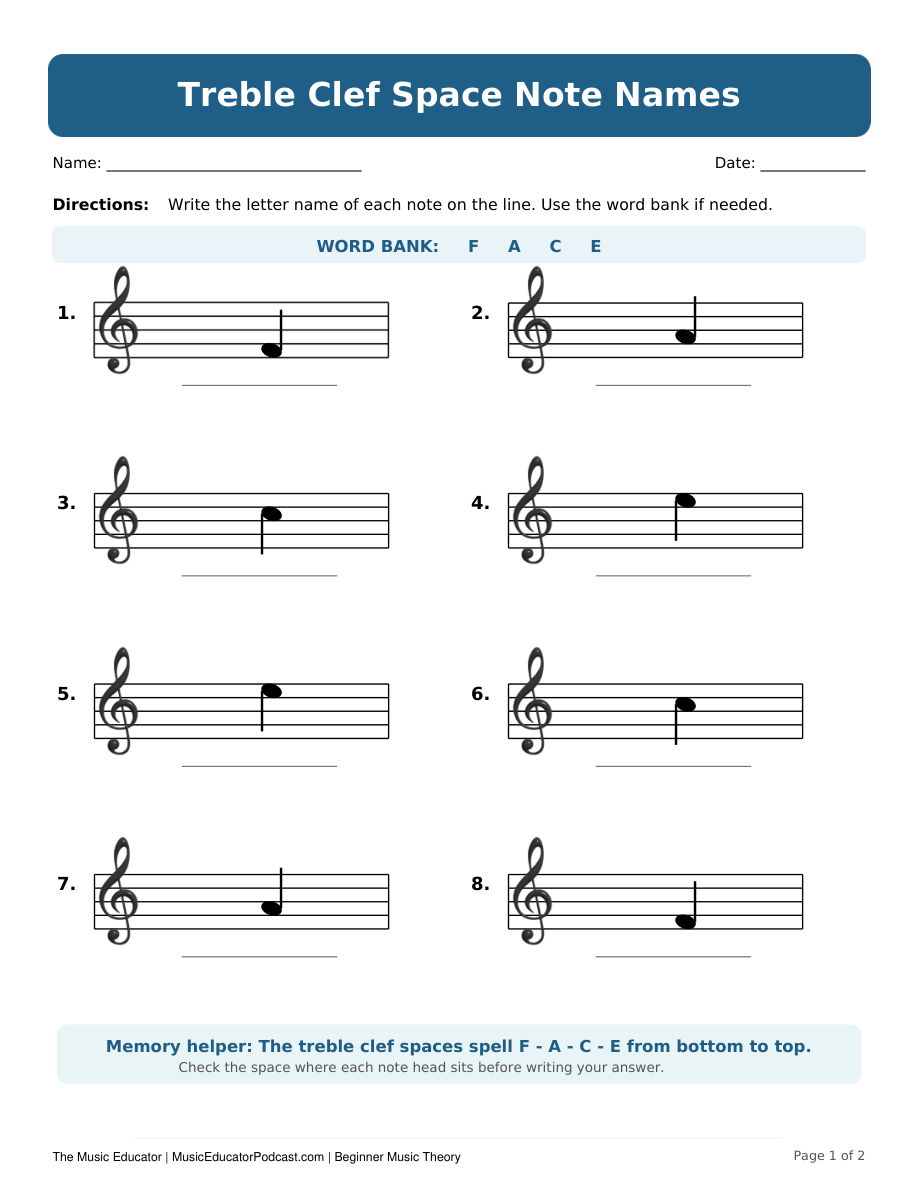
Read treble-clef spaces
Focus on F, A, C and E in the four spaces inside the treble staff.
Treble Clef Space Note Names →
Teaching idea: note reading
Model the lowest space, then work upward. After the written task, point to spaces in a different order and ask students to explain their answer. Keep line notes as a separate check.
RHYTHM
Make the beats add up
Complete measures in 3/4 and 4/4 with a missing note or rest.
Rhythm Detective: Repair the Measure →
Teaching idea: rhythm
Ask students to name the required beat total, count what is present, and explain what is missing. Clap a corrected measure while keeping the pulse through its rests.
EXPRESSION
Follow changes in volume
Connect dynamic markings and hairpins with gradual changes in sound.
Dynamics Detective: Follow the Volume →
Teaching idea: expression
Speak a familiar phrase through one printed dynamic change. Keep the pace steady. Ask students to identify the starting level, the direction of change and the written ending level.
ARTICULATION
Connect markings to playing
Explore staccato, accent, tenuto and slur with a separate teacher key.
Teaching idea: articulation
Compare two ways of shaping the same short phrase. Ask students which mark matches each version and why. Discuss articulation in musical context rather than assigning every mark a fixed note length.
MUSIC TECHNOLOGY
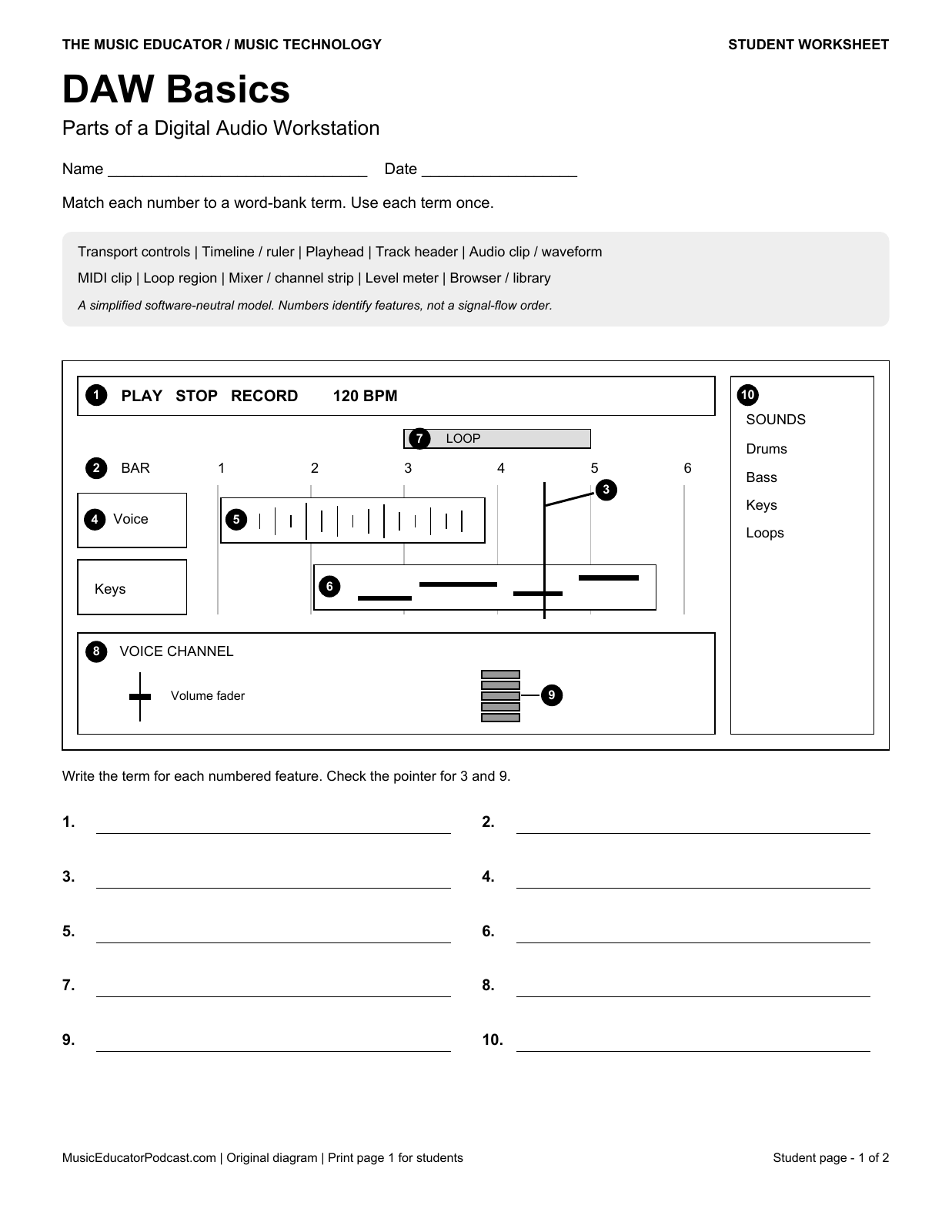
Separate MIDI from audio
Compare recorded sound with note events and predict a targeted edit.
Teaching idea: music technology
Have students predict what changes when a note moves in the piano roll. For an optional software extension, switch instrument sounds without changing the notes, then describe what stayed the same.
AUDIO EDITING
Plan a careful audio edit
Read a labeled timeline, calculate a selection and protect quiet speech.
Waveform Detective: Find the Edit →
Teaching idea: audio editing
Before selecting a region, ask students what must remain audible and why. Use the diagram labels for the paper task. In a real recording, listen before deciding that a small waveform can be removed.
Before assigning: Preview the PDF and select the student pages. Answer-key formats differ by resource; follow the download instructions on that worksheet’s page.
Choose a subject
Turn one worksheet into a short lesson
Try this suggested 10-minute routine. Adjust the timing and number of questions to your students.
- Model — about 2 minutes. State one learning goal and work through one example aloud.
- Practice — about 6 minutes. Assign a manageable selection. Ask students to explain the notation or diagram that supports one answer.
- Check and transfer — about 2 minutes. Review one response, then apply the same idea to a new example, a familiar phrase or your classroom software.
Exit prompt: “What did you notice, what did you decide, and what evidence helped?” Use the responses to choose the next demonstration.
Find the right worksheet
Subject pages group related activities so you can explore the full collection. Each resource page includes a preview, a clearly labeled download, and a short suggestion for classroom use. Review the PDF before printing and select only the student pages when a separate key is included.
Keep learning practical
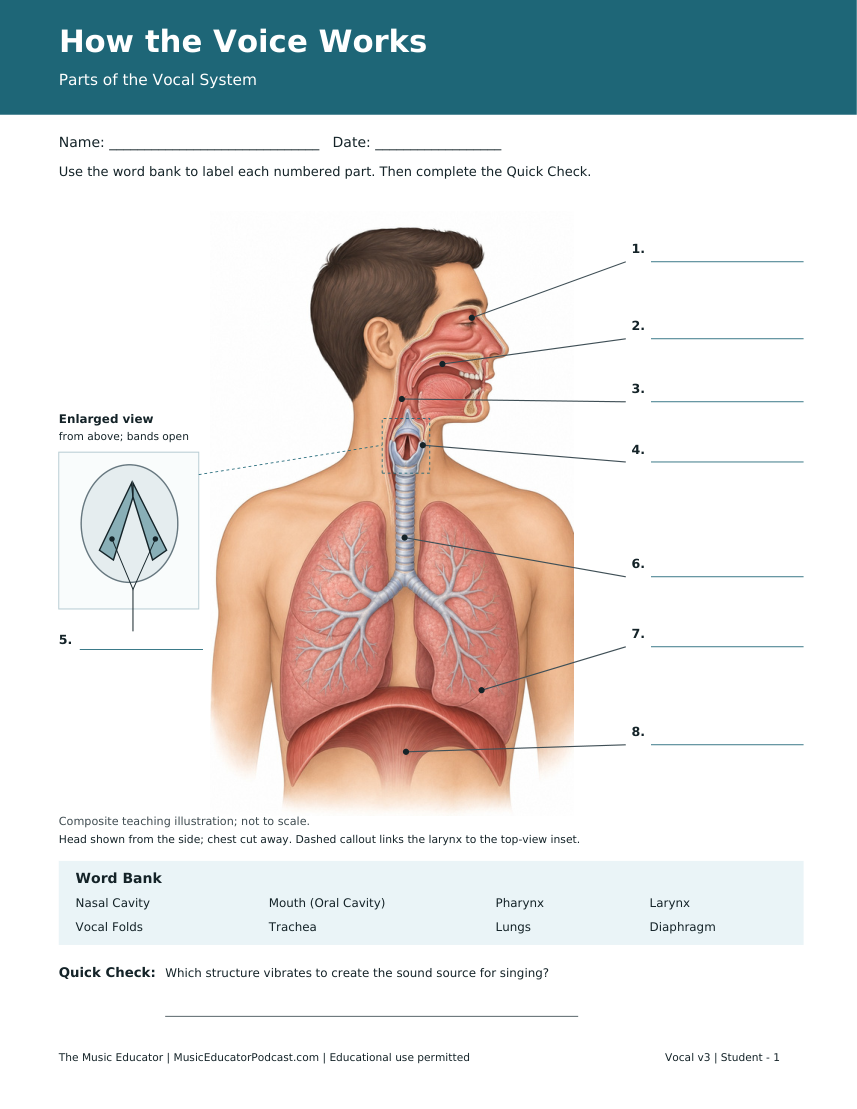
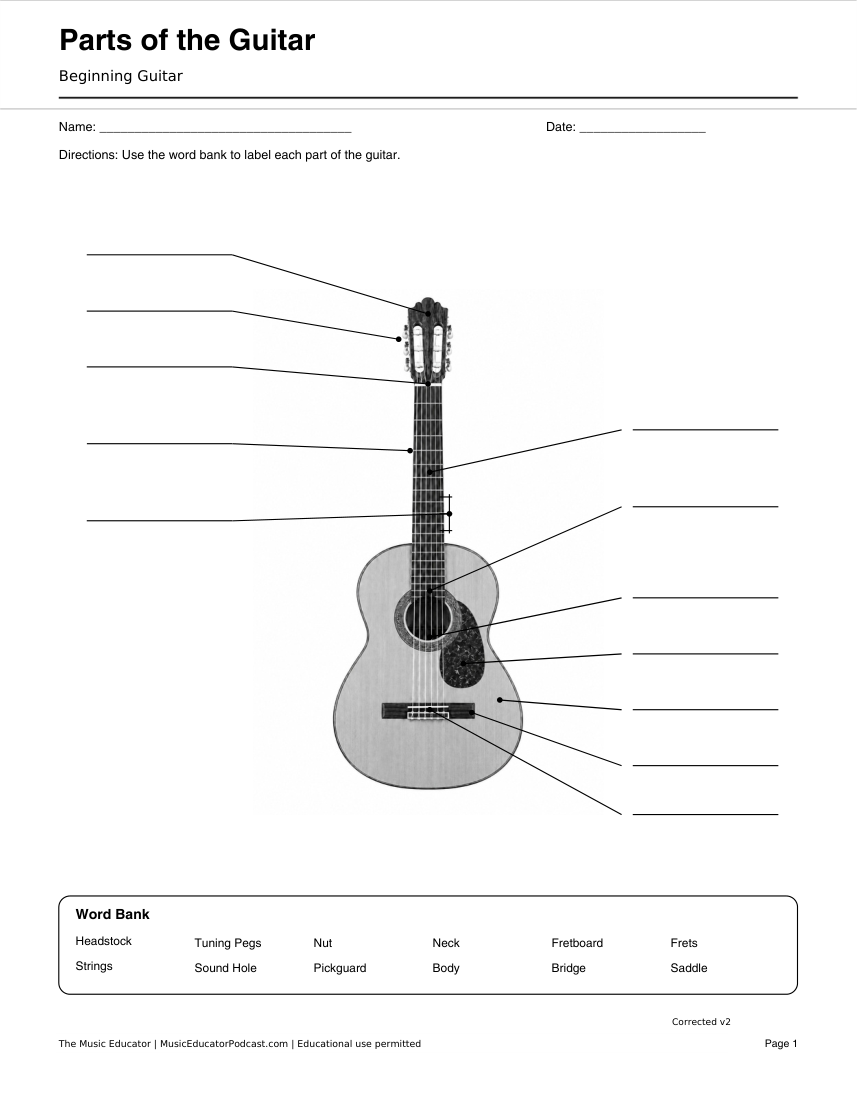
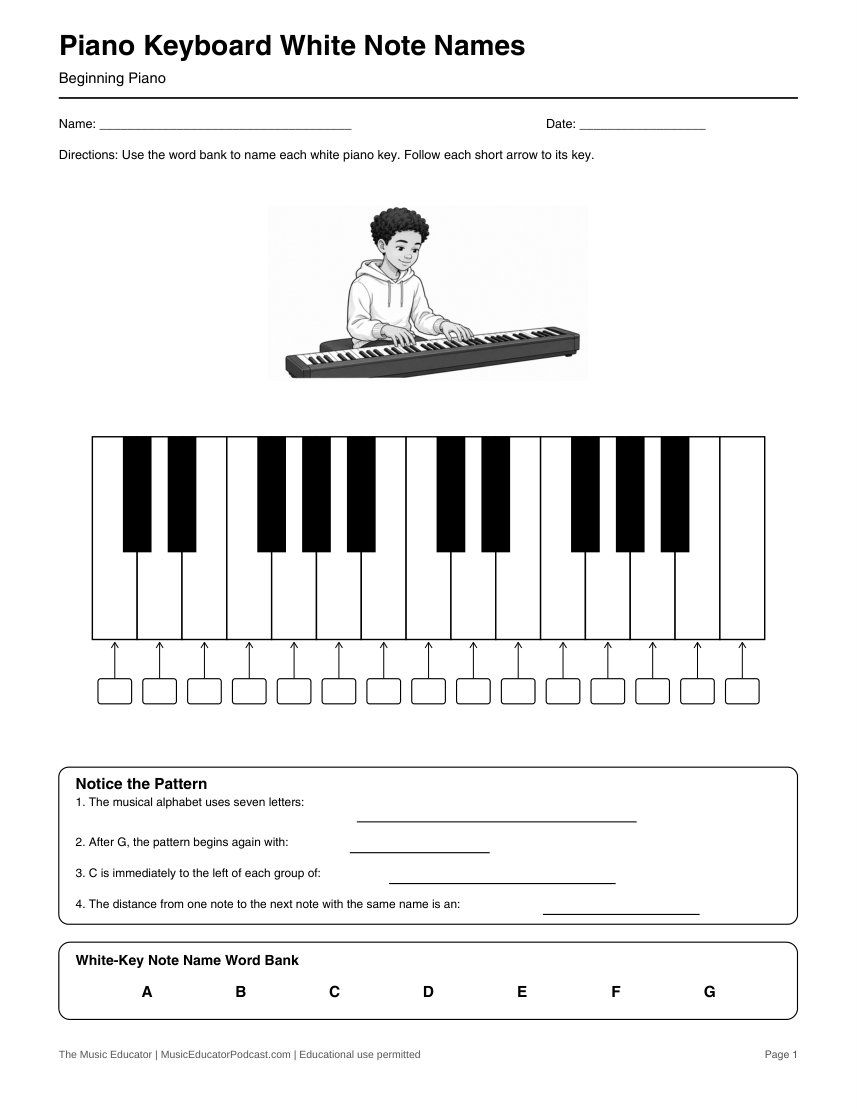
Pair labeling activities with the instrument or interface students will use. Follow written note practice with a short reading or playing task, and revisit reflections later so students can compare their own responses.
Looking for rehearsal tools or teaching guides? Visit Music Educator Resources or browse the Music Education Directory.