Choir Skills Lab
Build rehearsal-reading habits with six focused choir worksheets. Singers follow part entrances, count silent measures, compare musical textures, interpret a supplied breath plan, track dynamics, and match rehearsal observations with useful next checks. Each activity uses an original written model and includes a matching answer key.
6 original worksheets · 8 questions per worksheet · 6 matching answer keys
US Letter • black-and-white • no signup required
Download the complete choir packet (PDF, 12 pages)
Printing: The complete packet puts six student pages first, followed by six keys. Print pages 1–6 for students and keep pages 7–12 for checking. Each individual PDF below contains its student page first and answer key second. Print page 1 only for a student copy.
What students will practice
- Locate entrances and rests in a four-part rehearsal map.
- Count silent measures in 4/4 and identify the next entry.
- Compare a shared melody, melody with accompaniment, and delayed imitation.
- Interpret a marked phrase plan and distinguish dynamics, timing, pitch, balance, and diction.
Choose a worksheet
- Choir Part and Entry Map
- Choir Rest and Re-entry Map
- Choir Texture Models
- Choir Phrase and Breath Map
- Choir Dynamic Route
- Choir Rehearsal Evidence
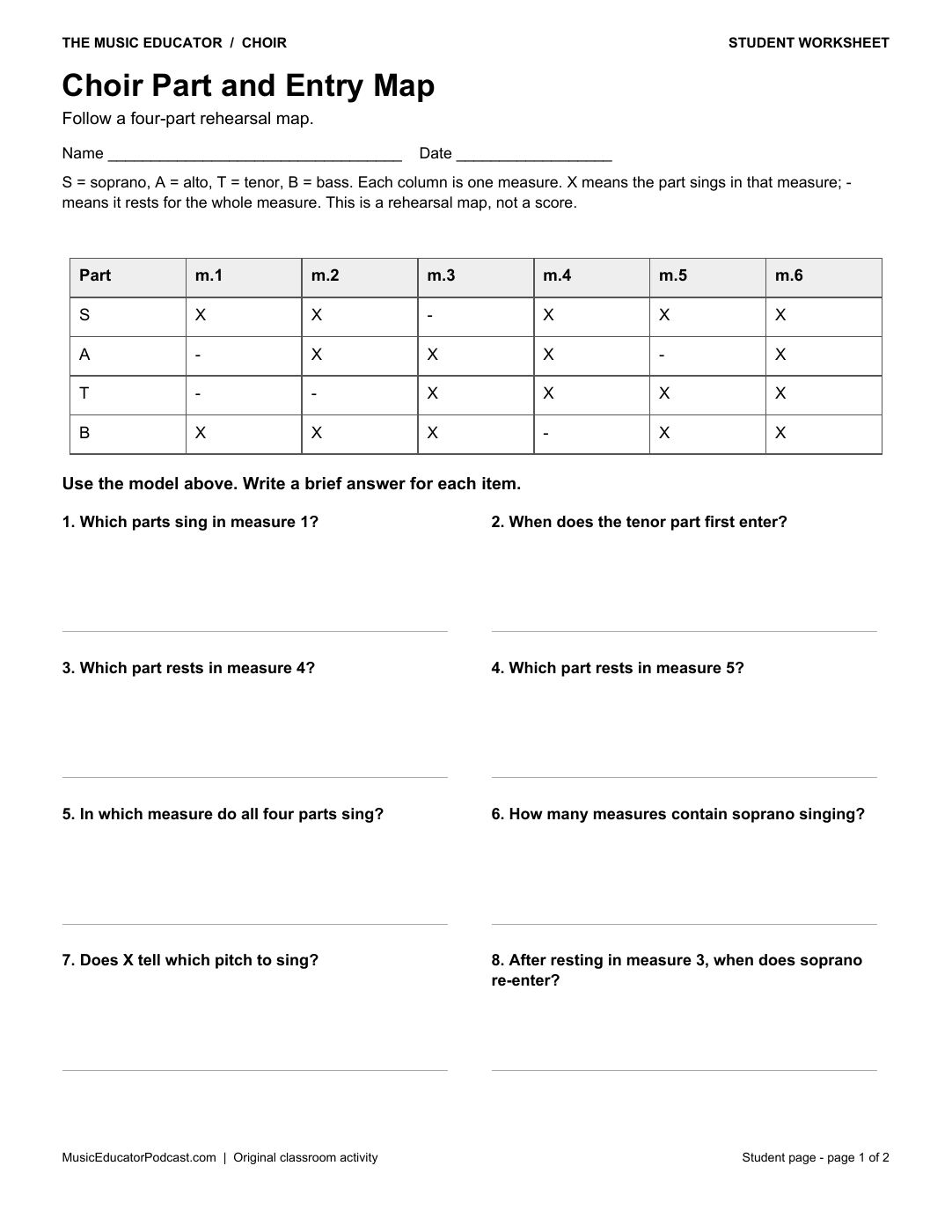
Choir Part and Entry Map
Track soprano, alto, tenor, and bass across six measures. Students identify entries, whole-measure rests, and the measure where all four parts sing.
Download Choir Part and Entry Map + answer key (PDF, 2 pages)
Preview the student page: Choir Part and Entry Map
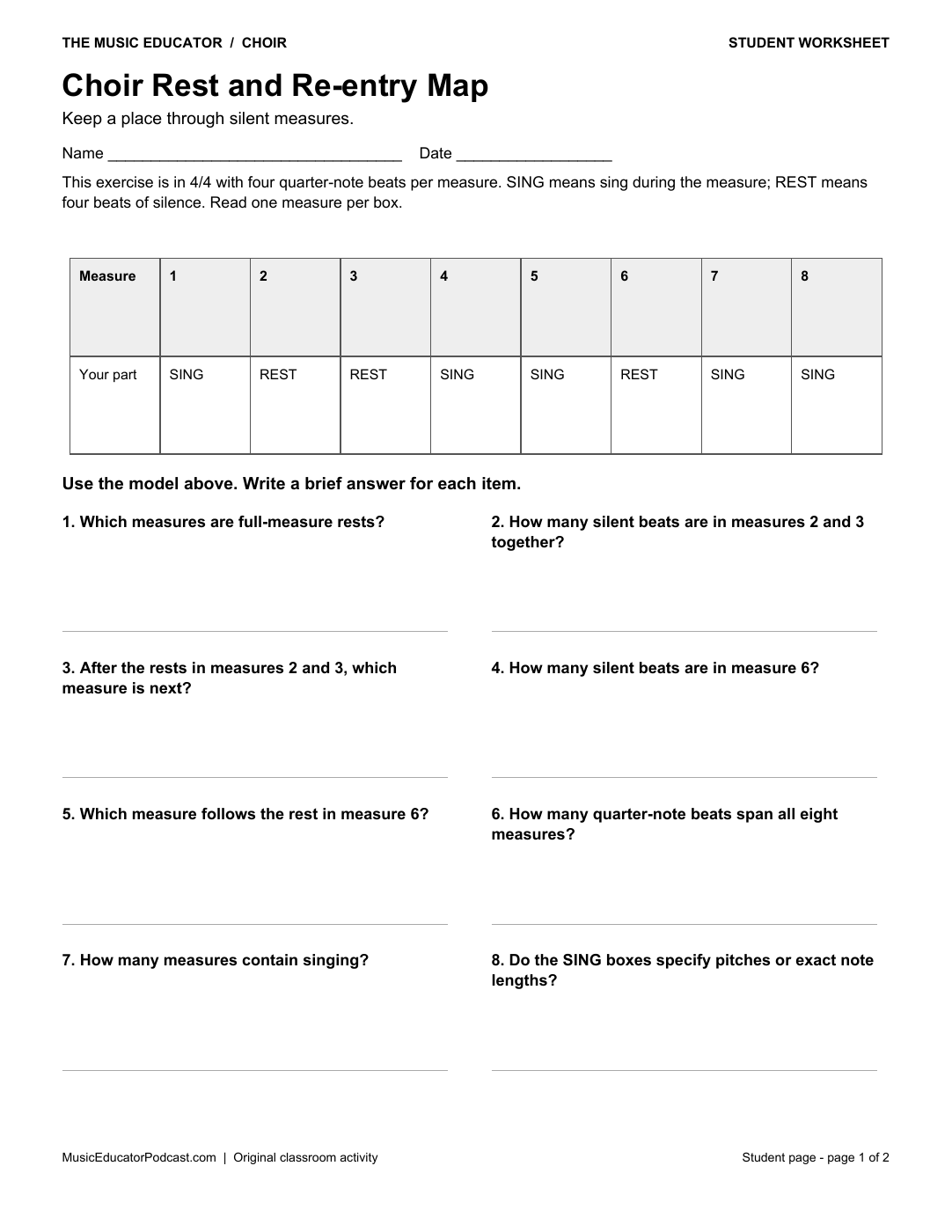
Choir Rest and Re-entry Map
Count full silent measures in an eight-measure 4/4 map. Students keep their place and distinguish measure-level planning from complete notation.
Download Choir Rest and Re-entry Map + answer key (PDF, 2 pages)
Preview the student page: Choir Rest and Re-entry Map
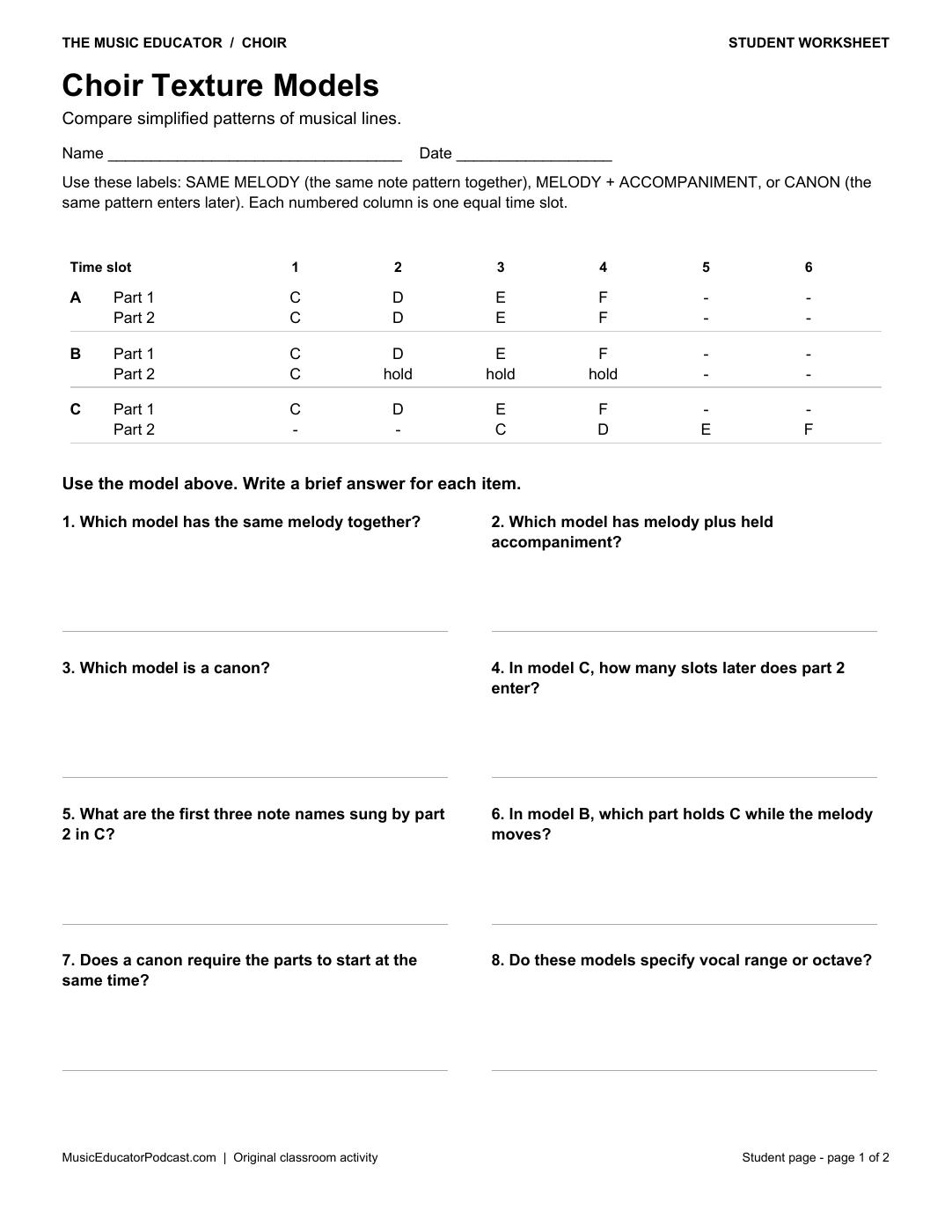
Choir Texture Models
Compare three aligned six-slot models: the same melody together, a moving melody with a held accompaniment, and a pattern entering two slots later. Dashes mark silence in these models.
Download Choir Texture Models + answer key (PDF, 2 pages)
Preview the student page: Choir Texture Models
Choir Phrase and Breath Map
Read three original text lines with teacher-marked breaths. Students locate the word before each mark and discuss adjusting a real plan comfortably.
Download Choir Phrase and Breath Map + answer key (PDF, 2 pages)
Preview the student page: Choir Phrase and Breath Map
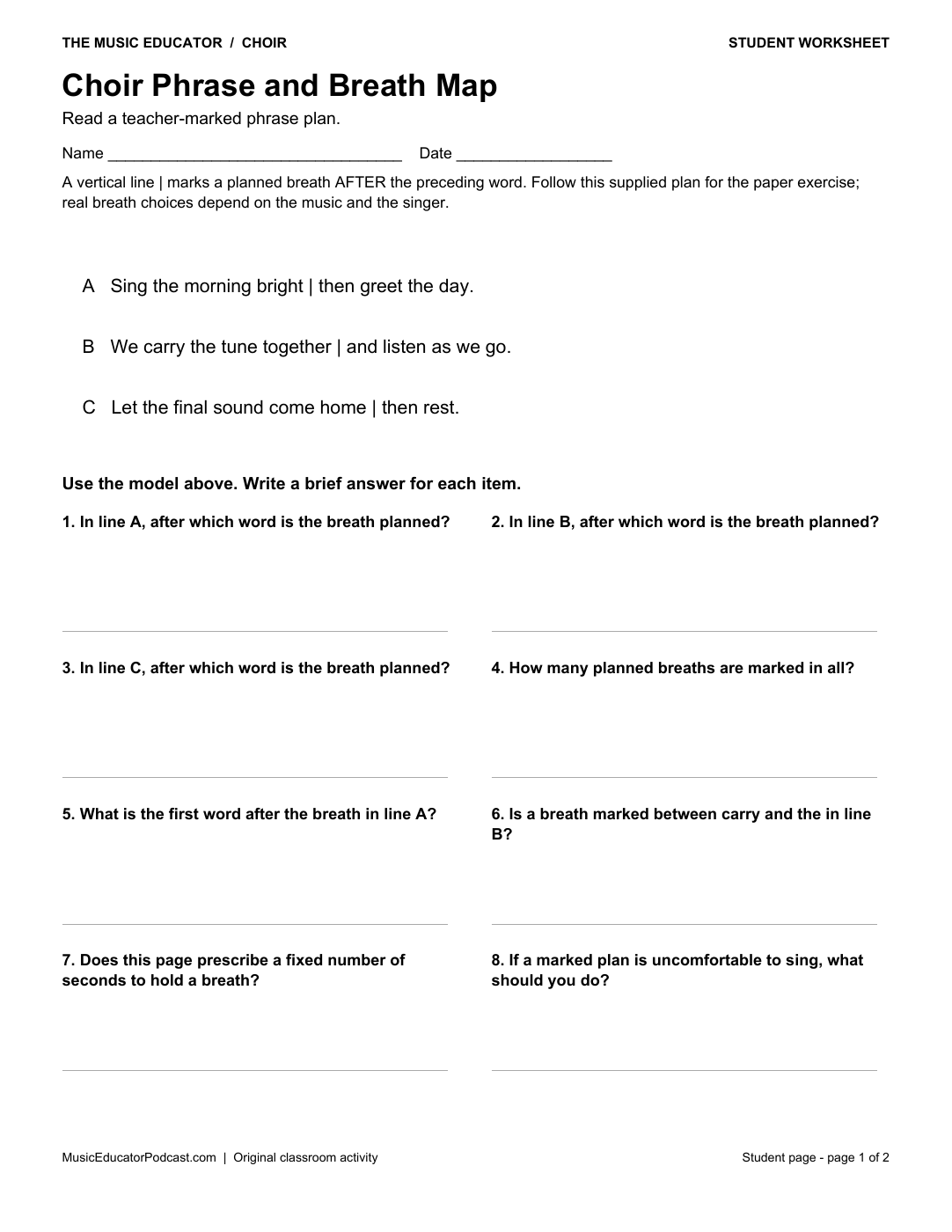
Choir Dynamic Route
Follow a route from soft to loud and back. Students separate gradual loudness changes from tempo changes and identify the stated dynamic targets.
Download Choir Dynamic Route + answer key (PDF, 2 pages)
Preview the student page: Choir Dynamic Route
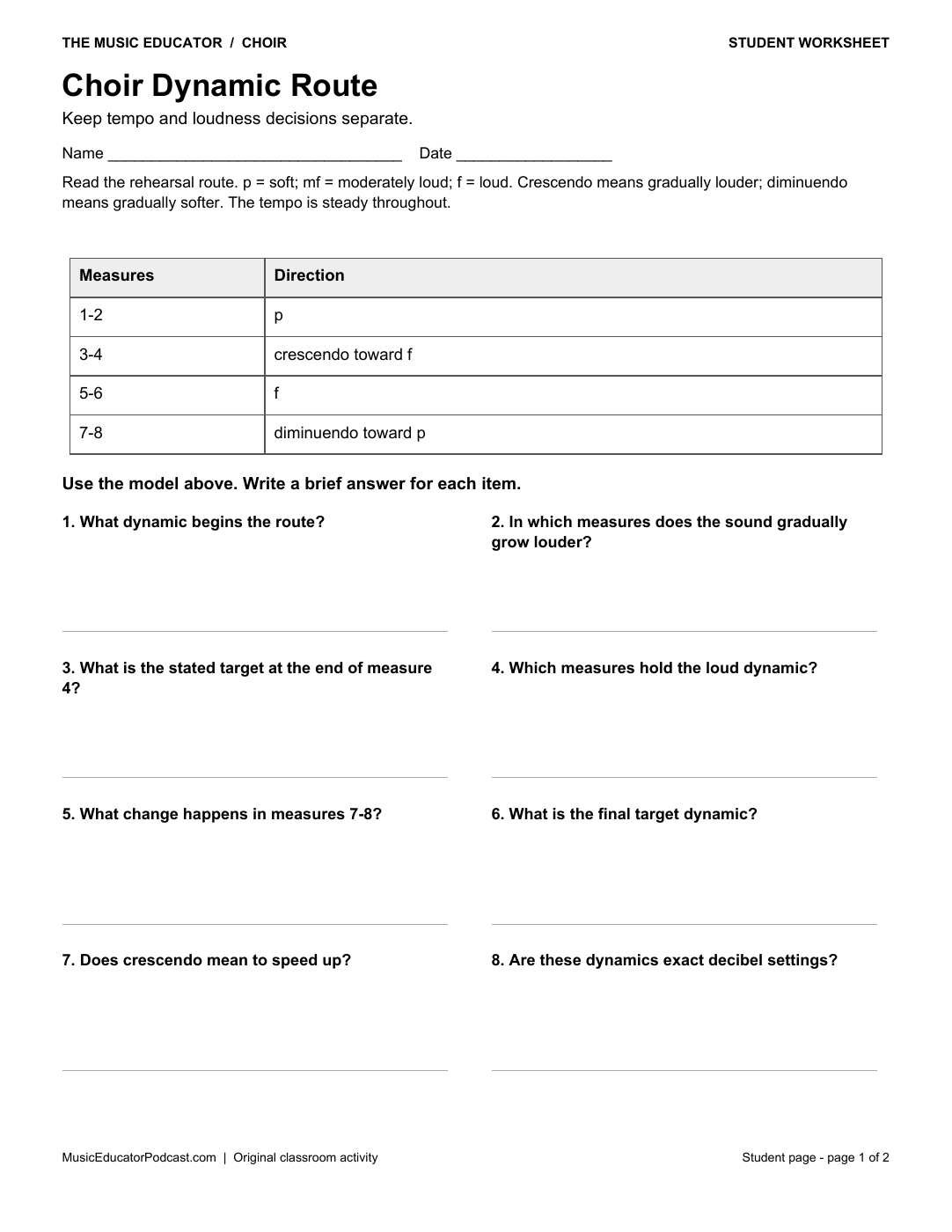
Choir Rehearsal Evidence
Match four written observations with rhythm, balance, pitch, or diction. Students select a focused next check without pretending to have heard a recording.
Download Choir Rehearsal Evidence + answer key (PDF, 2 pages)
Preview the student page: Choir Rehearsal Evidence
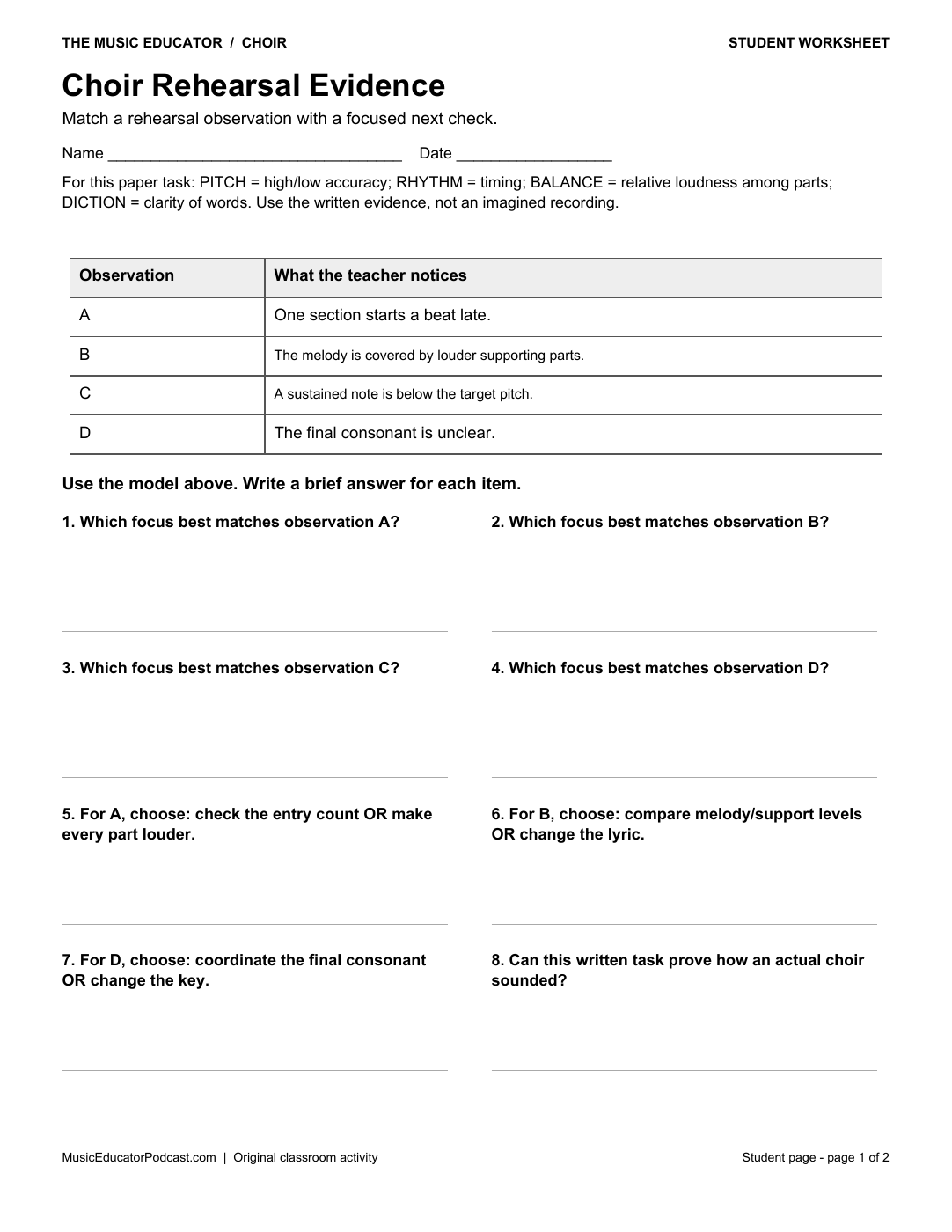
How to use this set
Choose one page before rehearsal or for a 10–15 minute classroom activity. Demonstrate how to follow one row or phrase, then have singers justify answers with the printed evidence. Connect one finding to the ensemble's actual score afterward. These simplified maps do not specify all pitches, rhythms, ranges, or performance decisions. Adjust real breath plans with the teacher for the music and the singer; never require students to force an uncomfortable plan.
Teacher questions
Are these vocal exercises or medical advice?
They are written rehearsal-literacy activities, not vocal-health treatment or prescribed breathing exercises.
Do students need to sing to complete them?
No. All answers come from the supplied models. A teacher can follow the written work with an appropriate rehearsal demonstration.
Can I use them with a non-SATB choir?
Most pages are independent of ensemble voicing. The part-entry page specifically teaches an SATB map; explain that model or choose another page for your group.
Are answer keys included?
Yes. All six activities have matching answer keys. Accept equivalent wording when the musical meaning is correct. Use the keys to discuss the reasoning, not only to mark an answer.